
‘Farm-to-table’ is one of those phrases that can mean everything and therefore, sometimes, not much at all.
For me, the useful version is pretty simple: we should know where our ingredients came from. Not every customer needs to know every farmer by name, but we should be able to tell you which farm or producer grew or made the food we are serving and where they are located.
And every meal should be delicious.
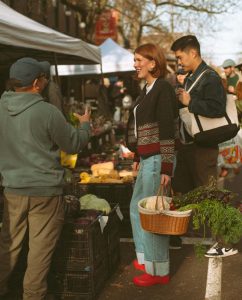
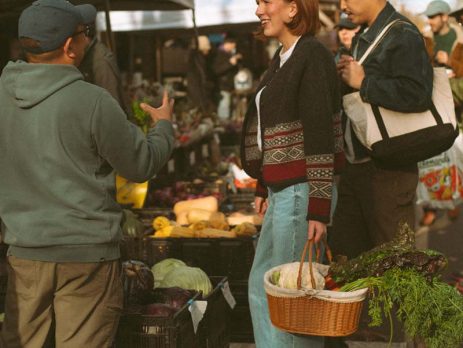
At Red Clog Kitchen, we buy from a mix of local farms and small Washington producers. I get their availability lists, see what they are harvesting, ask questions, pick up orders, and in many cases know the people behind the food beyond a purchase order.
There is one farmer I see so often that he has asked me if I’m sleeping enough. We talk about our families. He knows when I’m going out of town to see my nephews; I know when something is happening in his life. That is obviously not required for a carrot to taste good, but it is part of what ‘local’ means to me. These are not anonymous suppliers.
We do not write a fixed menu months in advance and then try to force local ingredients into it. We look at what farms have available and let that influence what we cook.
If peppers and tomatillos are abundant, they might become salsa verde for slow-cooked pork. If corn is everywhere, it can show up in chili, dips, pasta salad or even cookies. If Brussels sprouts are just starting to come in, I’m already thinking about how to use them.
The season is not just decoration on the menu. It is part of the planning process.
-> Read more about our process of how we build our weekly menus.
One thing I value about buying directly is knowing who to call. If we ever have a question about an ingredient, we can trace it back to the farm or producer and have a real conversation about where and when it was harvested or made.
That directness is very different from trying to work backward through a giant supply chain. It gives us more transparency, and it gives customers a clearer answer when they want to know where their food came from.
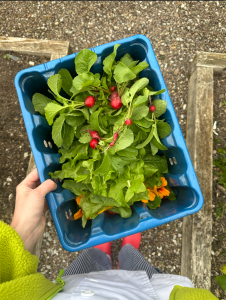
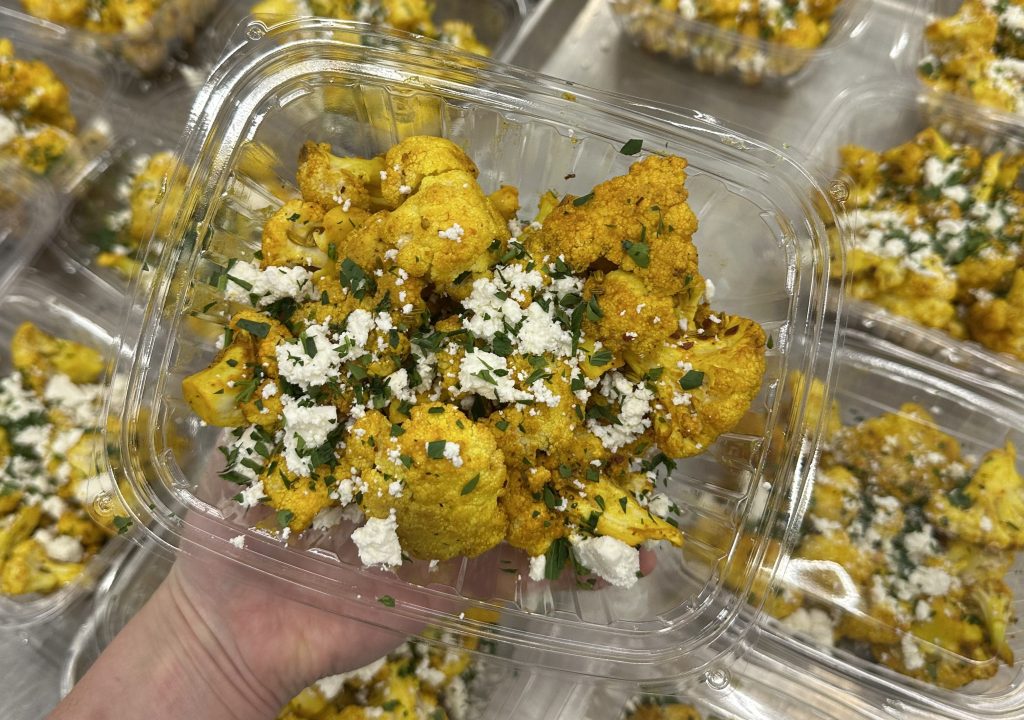
A lot of the produce we use was harvested the day before we cook with it, sometimes even the same day. That freshness shows up in the flavor and texture, which means I do not want to bury everything under twenty ingredients.
A beet salad can be beets, olive oil, honey, sea salt, mint and goat cheese. Great tomatoes can become a tomato sandwich. Fresh carrots can be roasted and finished with something simple on the side.
When an ingredient is good, one of the best things a cook can do is stop messing with it.
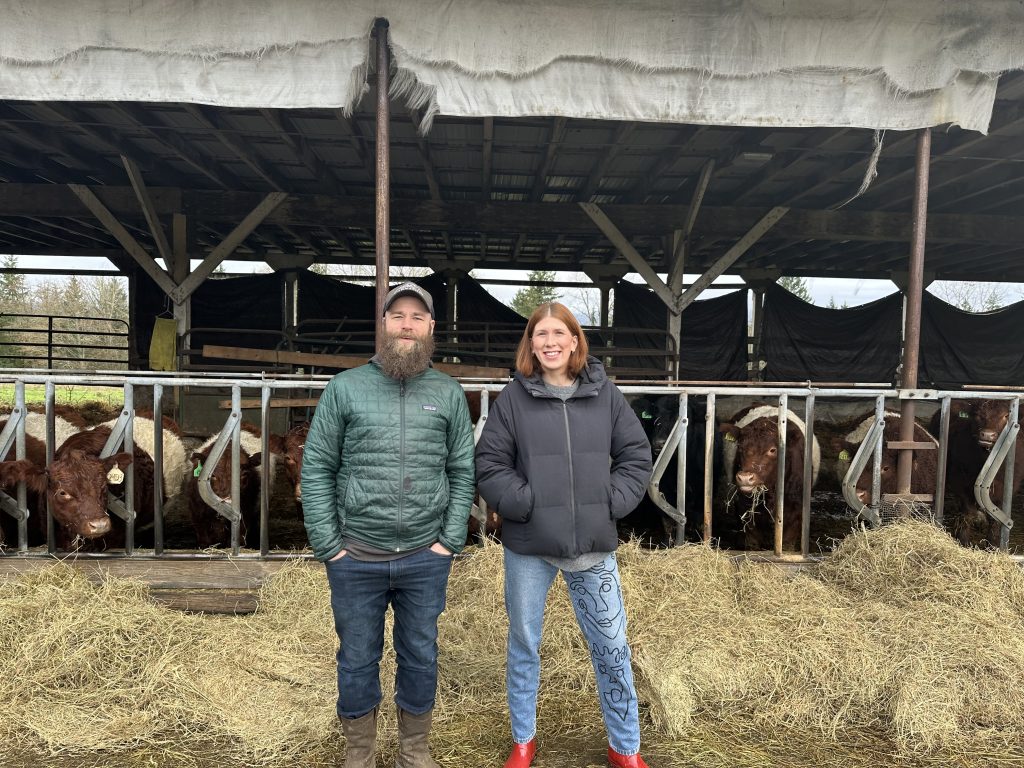
We like to volunteer at farms.
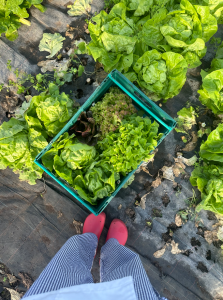
On one very rainy morning at Radicle Roots in Snohomish, we were spreading compost and digging up roots. It was not a glamorous farm-photo moment. It was wet, muddy work, and it made me appreciate farmers even more.
Farming takes labor, land, equipment, planning and a lot of risk. When a farm is using thoughtful growing practices, there is even more work behind what eventually arrives in our kitchen. Knowing that changes how I think about purchasing and waste.
There are a couple of ingredients we use that simply are not grown locally in the quantities we need. Sweet potatoes are a good example. Right now we’ve been having to get them from a farm we trust in California. But we are also talking to a local farm who may be growing them this year. I told her I’ll buy all of them!
When we cannot source something nearby, we still buy through farm-focused suppliers rather than pretend every ingredient came from down the road.
That is part of the point, too: ‘farm-to-table’ should not require creative writing. It should make the sourcing easier to understand.
For customers, all of this behind-the-scenes work should result in something much simpler: a good meal that tastes fresh, supports nearby farms and producers where possible, and fits into a normal week.
Our mission is to make healthy, delicious food accessible while supporting the farmers and community that make it all possible.
You do not need to study availability sheets or drive to farm pickups. We do that part. You just get to eat what the season gave us.